Community Power for Clean Air: Lessons in Equity and Inclusion from Nairobi, Indore and Jakarta
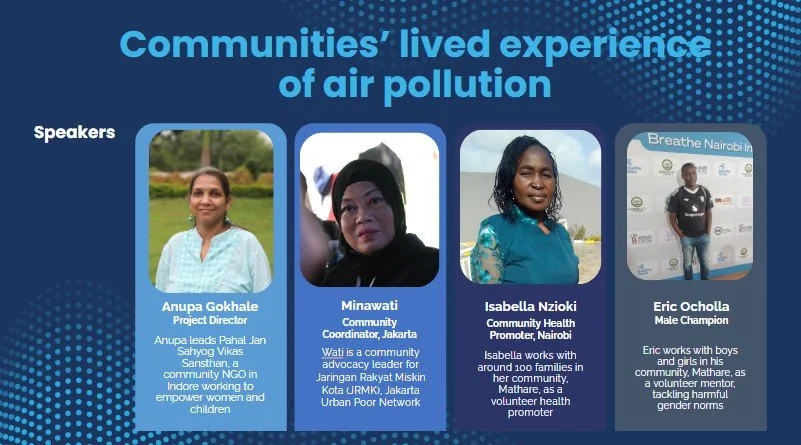
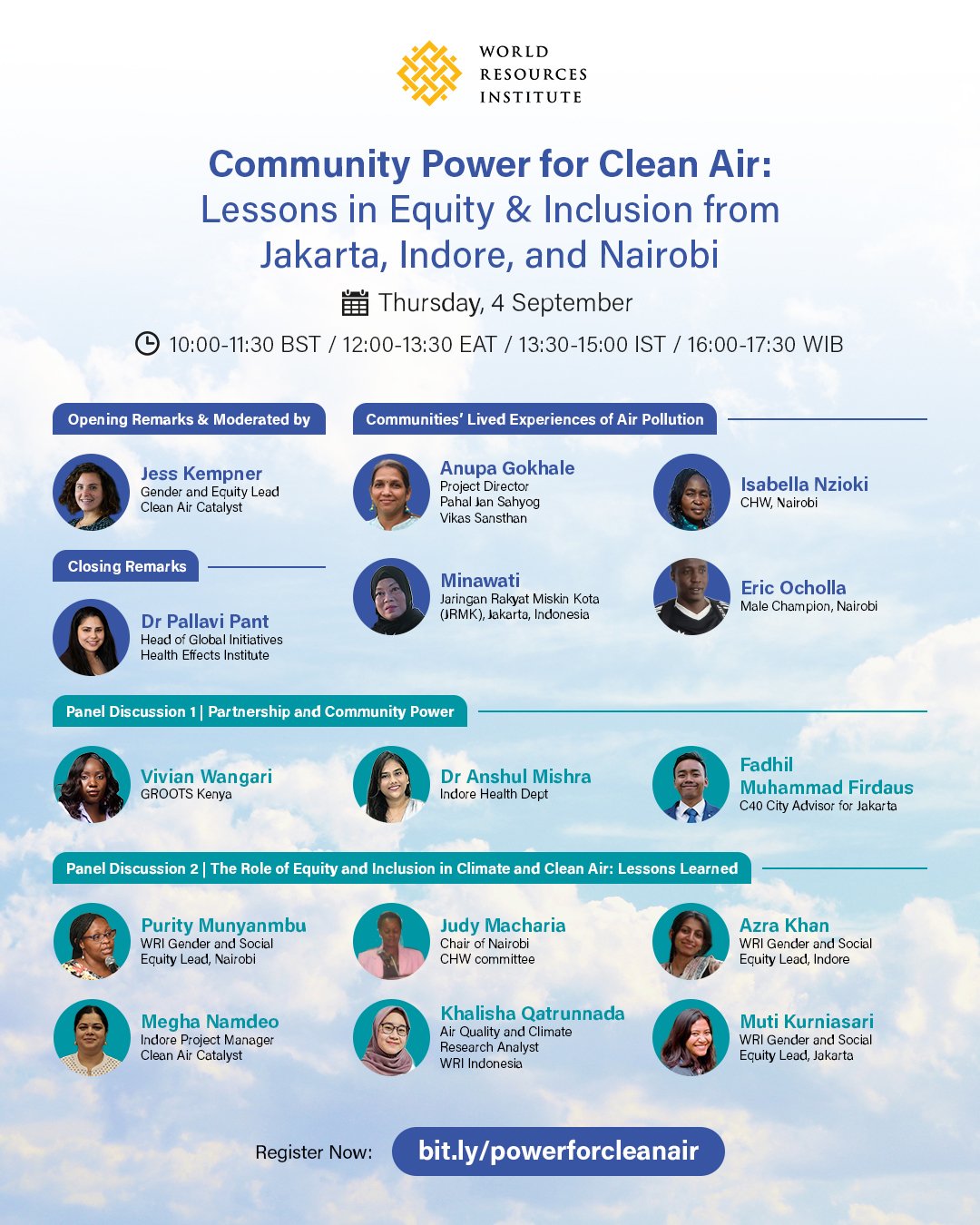
In September 2025, WRI brought together about 70 staff, local collaborators, and external experts to reflect on the work of the Clean Air Catalyst global partnership as it wrapped up five years of activities. A central theme emerged from the discussions: the need to position clean air action within broader social justice frameworks to address health, livelihood, and equity impacts.
Testimonies from community leaders made clear that gender, socioeconomic status, occupation, and location all shape exposure and health risks. However, experts highlighted that better data, especially gender- and equity-disaggregated data, is needed to fully understand the scale of the problem and tailor responses. They also noted that communities must not be on the sidelines providing input, but central to policymaking: “Their experiences, their insights, and their evidence should very much be a part of how we shape policy decisions.” She called for a redefinition of progress in air quality governance, suggesting “as we move forward from here, let’s think about progress not only in terms of whether air quality levels improved—’Did PM2.5 levels reduce in a particular location?’—but was that done in a way that was just and fair, and did it benefit those that have, perhaps, borne the brunt of those exposures, keeping them very much at the center of decisions and solutions.”
Download the conference proceeding summary or watch the event below.