Opportunities to Reduce Open Burning of Municipal Solid Waste in Indore Municipal Corporation Area
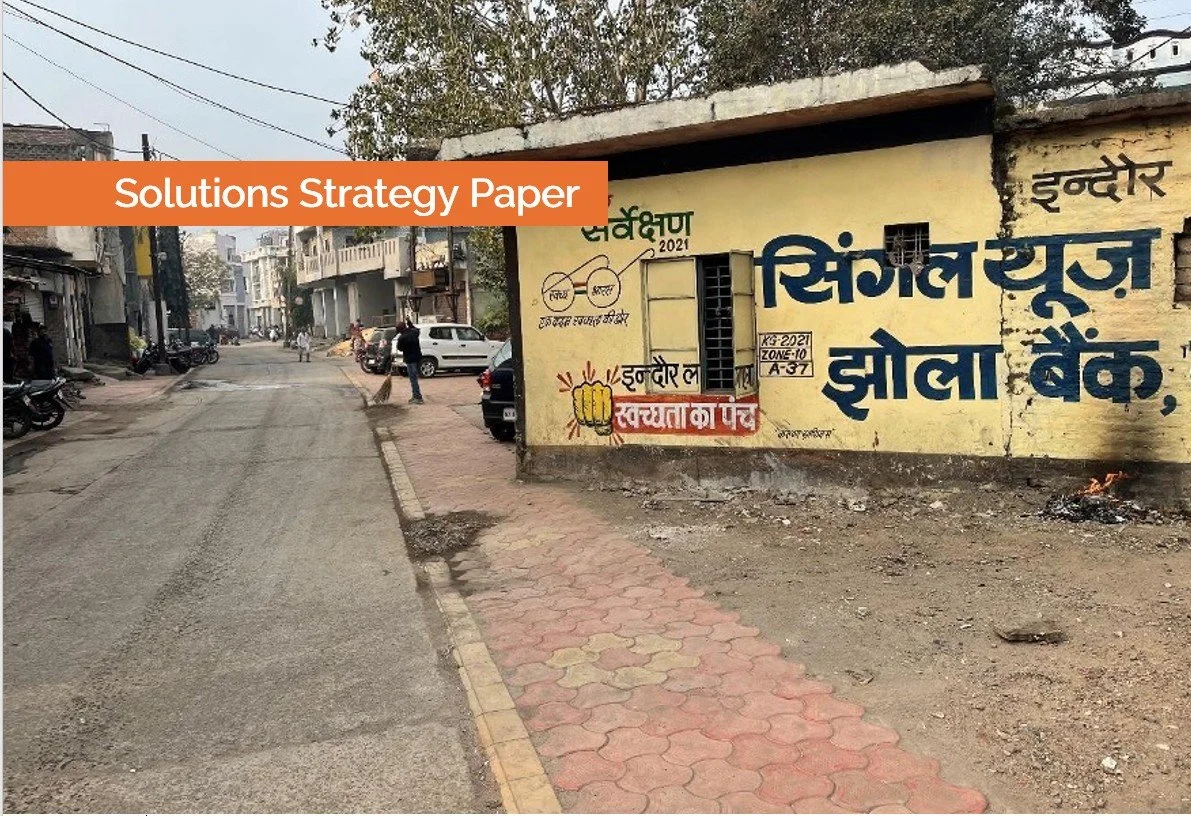
Indore City has made remarkable progress in solid waste management, as evidenced by its repeated recognition as India’s “Cleanest City” in the annual Swachh Survekshan competition. However, a survey of emissions activities in Indore conducted by WRI India under the Clean Air Catalyst program found instances of municipal solid waste (MSW) burning contributing around 2.5% of Indore's PM 2.5 emissions.
A Solutions Strategy paper prepared by WRI India’s Sanjar Ali, Vandana Tyagi, Shazabe Akhtar, Bhavay Sharma, Prakash Doraiswamy and Azra Khan, with contributions by Ananya Roy (Environmental Defense Fund) and Saurabh Porwal (Vital Strategies) provides a thorough review of the existing policies and programs available at various governance levels and evaluates the possible strategies for the mitigation of air pollution from MSW burning that include:
Awareness program targeting citizens of the IMC area on the health impacts of open burning of MSW
Increasing waste collection efficiency
Action towards the proper collection of dried leaf and plant trimming waste
Actions toward providing alternative and affordable/subsidized heating, especially for low-income communities that rely on cheap sources of fuel
Enhanced MSW management in industrial zones
Mainstreaming scrapers, scrap dealers and ragpickers in the waste management process to help stop commercial burning.